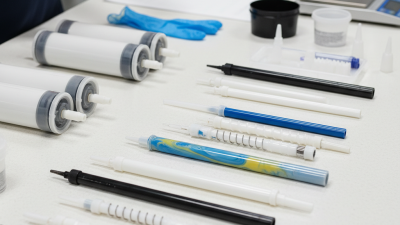
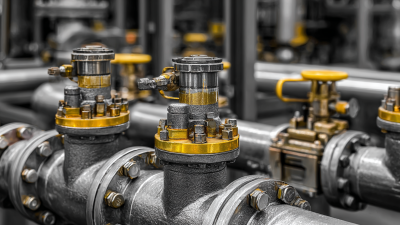
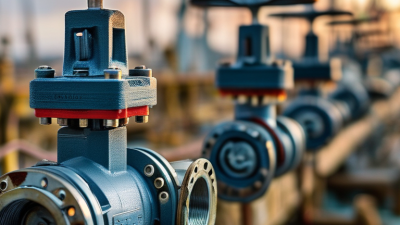
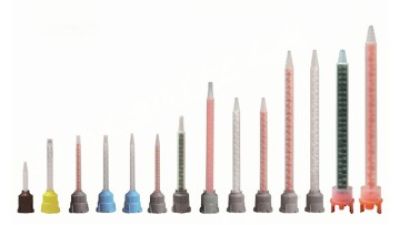
China's market for Inline Mixing Tubes is really picking up, with a growing demand across industries like adhesives, coatings, plastics, food processing, and water treatment. Manufacturers are now offering more compact designs, stainless steel options, and even custom internal parts to better fit specific needs. These upgrades can help improve how evenly materials blend, all while saving space in tanks and cutting down processing time.
Looking ahead to 2026, this guide takes a close look at ten of the top Chinese manufacturers using practical, easy-to-understand criteria. We evaluate things like build quality, flow capacity, pressure ability, how well the materials match with the products, and whether they offer customization. We also review technical drawings, quality control measures, testing data, and how responsive they are after sales. A good Inline Mixing Tube isn’t just about looking nice—it's gotta match your process perfectly. Details like weld quality, connection sizes, how long the product stays in the tank, and how easy it is to clean really matter.
Experience counts too. One supplier might understand working with thick, high-viscosity materials but lack strong support for exporting. Another might offer really attractive prices but come with limited documentation. These differences can impact everything from how easy it is to install and maintain the equipment to what your long-term costs will look like. So, keep in mind, this ranking is just a helpful guide, not a definitive ranking. Public info can be incomplete, and factories may change their capabilities over time—that’s something to watch out for.
It’s basically a carefully put-together list, not a perfect one.
Before making any purchase, it’s smart to double-check things like current certifications, production capacity, sample performance, and delivery conditions. If your fluids are abrasive, contain sensitive additives, or don’t flow consistently, pilot testing can be a real lifesaver. The companies featured here are evaluated based on their engineering skill, manufacturing reliability, understanding of different applications, and overall credibility in the industry. This way, you get a better shot at making informed decisions when sourcing Inline Mixing Tubes from China in 2026.
In inline static mixing, Reynolds number helps predict how fluid moves through the tube. Crane Technical Paper No. 410 identifies pipe flow below Re 2,300 as generally laminar. Between Re 2,300 and 4,000, flow becomes transitional. Above Re 4,000, turbulent behavior is expected. These limits are useful, but not sacred.
At Re 2,300, viscosity still controls the profile. Poorly matched fluids may form visible layers after short mixing lengths. At Re 4,000, eddies increase radial exchange and usually improve blending. However, static mixer geometry, viscosity ratio, residence time, and pressure loss matter greatly. Perry’s Chemical Engineers’ Handbook, 9th Edition, also treats Reynolds number as a screening tool rather than a complete mixing guarantee. That distinction is often missed.
Tips: Check Reynolds numbers for each operating fluid, not only the design fluid. Record inlet temperature and viscosity. A small temperature change can shift the regime. Test pressure drop before full-scale production.
For manufacturers and engineers evaluating inline mixing tubes in China, the transition zone deserves practical testing. Computational results can look precise, yet field measurements may disagree. I have seen this happen. Re 4,000 is not automatically “fully mixed.” Sampling across the outlet, especially near the wall, can reveal uneven concentration. Design decisions should combine handbook correlations, pilot trials, and measured residence time.
China’s inline mixing tube sector is gaining support from manufacturing, automotive, electronics, and construction demand.
China’s National Bureau of Statistics reported a 5.8% rise in industrial output during 2024. The China Association of Automobile Manufacturers recorded over 31 million vehicle sales. These figures strengthen demand for reliable Epoxy Mixing Tube systems.
Export signals also matter. China Customs reported goods exports of about RMB 25.45 trillion in 2024, while imports reached roughly RMB 18.39 trillion. However, trade data rarely separates static mixers from broader plastic, dispensing, or adhesive equipment categories. This limitation deserves attention.
A “top 10” ranking should therefore compare verified shipment records, production capacity, export destinations, material consistency, and replacement-tube availability. Industry reports from Grand View Research and MarketsandMarkets indicate continued global growth in adhesive and dispensing equipment, but their market boundaries differ. Direct comparisons can mislead.
Tips:
Check resin compatibility, mixing ratio accuracy, pressure resistance, and documented flow testing. Ask for batch records, not only attractive samples. Demand may rise, yet forecasts remain imperfect. Regional orders, new-energy vehicle production, and electronics investment should be tracked monthly. A supplier with strong output may still struggle with export documentation or stable quality. Prices alone are not enough.
China Top 10 Inline Mixing Tube Manufacturers 2026
Ranking Criteria: ISO 9001, DN Range, Pressure Class, and Lead Time
Selecting inline mixing tube manufacturers requires more than comparing catalog prices. In practical procurement, ISO 9001 provides an important quality baseline. However, certification alone does not prove stable production. Buyers should verify the certificate scope, validity, audit body, and documented inspection procedures. Factory records should connect raw material batches with dimensional checks and pressure tests. An unverified certificate creates unnecessary risk.
DN range is another central measure. A supplier covering DN15 to DN300 may serve both laboratory systems and industrial pipelines. Still, broad specifications can hide limited tooling or outsourced production. Ask for drawings, tolerances, surface finishes, and recent inspection samples. Pressure class must match the operating medium, temperature, and surge conditions. A tube rated for PN16 may be unsuitable for a system requiring PN40. Test reports matter.
Lead time should be measured in clear calendar days, not vague promises. Compare sample delivery, standard production, custom fabrication, and export preparation separately. Communication during delays also reveals operational maturity. No ranking is perfect. My assessment may favor documented evidence over attractive claims, yet documentation can miss real workshop performance. A short factory video is useful, but witnessed inspection is stronger. These four criteria support a more realistic comparison of China’s leading inline mixing tube manufacturers in 2026.
China’s leading inline mixing tube manufacturers now serve adhesives, sealants, coatings, and two-component resin systems. Their profiles differ by tube geometry, element design, flow capacity, and quality controls. Common materials include polypropylene, stainless steel, glass-filled polymer, and solvent-resistant engineering plastics. Stainless steel suits abrasive or heated compounds. Polymer tubes often reduce cost and disposable waste concerns.
Industry demand supports this expansion. Grand View Research reported that the global adhesives and sealants market reached about USD 76 billion in 2023. It also forecast steady growth through 2030. A MarketsandMarkets report identified construction, automotive, and electronics as major application sectors. These trends increase demand for precise dosing and stable static mixing. A Static Mixing Tube can create uniform blending without powered moving parts. However, tube performance still depends on viscosity, pressure, temperature, and curing speed. Specifications may look convincing, yet field validation remains uneven.
Tips: Check pressure-drop data, element geometry, and material compatibility before purchasing. Request batch records and practical flow tests. A clear test with real resin is more useful than a polished catalogue. One overlooked issue is cleaning. Some assemblies cannot be recovered after curing, so operators should plan replacement intervals and disposal procedures. Manufacturer comparisons should include tolerances, delivery consistency, technical support, and application experience—not only unit price.
China Top 10 Inline Mixing Tube Manufacturers 2026
A technical comparison should begin with the mixing index, not the catalog ranking. In practical trials, a good tube produces a uniform sample across the outlet stream. The coefficient of variation, or CV, should remain at or below 5% for demanding formulations. Operators should test several flow rates, temperatures, and viscosity levels. One clean result is not enough.
Throughput reveals how efficiently a tube handles production demand. A compact design may process 200 liters per hour, while a larger assembly may exceed 1,000 liters per hour. However, higher flow can reduce residence time and weaken dispersion. Pressure drop must also be measured. Excessive resistance increases pump load, heat generation, and maintenance frequency. A reading near the rated limit deserves caution.
Some data misleads. Manufacturers may report laboratory CV values without showing sampling locations or batch conditions. Ask for test methods, fluid properties, and pressure curves. For an inline conformal coating system, compatibility matters as much as mixing performance. Check seals, static elements, and cleaning access before selection. Field experience shows that small dead zones often create the first quality complaint. I have also seen acceptable results fail after viscosity changed during a winter shift. That limitation should stay visible in any 2026 comparison.
For a 2026 China supplier shortlist, material evidence matters more than polished catalogs. Inline mixing tubes handle shear, pressure, heat, and chemical exposure. Grand View Research estimates the global adhesives market reached about USD 78 billion in 2023, with continued growth through 2030. This expansion increases demand for Precision Glue Mixing Nozzles.
316L stainless steel suits wet, corrosive, and hygienic applications. Specify low-sulfur welds, controlled surface roughness, and documented passivation. PTFE offers excellent chemical resistance, but its creep and temperature limits require careful design. That detail is often overlooked.
ASME BPE guidance supports cleaner dead-leg control, orbital welding, drainability, and surface-finish verification. Ask manufacturers for material certificates, weld records, and pressure-test results.
CIP design needs more than a polished bore. Internal transitions should avoid trapped adhesive, while spray coverage must reach seals, corners, and outlet sections. A 2024 report from MarketsandMarkets identifies automation and hygienic process control as major drivers in advanced manufacturing equipment.
Supplier claims still need testing. Request flow-rate data, viscosity ranges, cleaning temperatures, and repeatability results under actual production conditions. One practical weakness remains common: a tube may pass a water test but fail with high-viscosity glue. Trial runs with representative adhesive, documented inspection points, and independent compliance review provide stronger evidence than certificates alone.
When comparing China’s top 10 inline mixing tube manufacturers for 2026, buyers need more than catalog claims. Viscosity data should show the tested fluid, temperature, flow rate, and measurement method. A tube tested with water may perform differently with a 5,000 mPa·s compound. Ask for pressure-drop curves at several operating points. Small details matter. Check whether the data covers startup and continuous production. I have seen a promising design lose efficiency when the material cooled during a short production pause.
Residence time affects blending quality, heat exposure, and material waste. Manufacturers should provide calculated residence-time ranges, internal volume, and recommended flow conditions. Verify these figures through a controlled trial, not a spreadsheet alone. A transparent supplier will explain dead zones and sampling limits. Maintenance records deserve equal attention. Buyers should examine cleaning time, access to internal parts, seal replacement intervals, and the availability of drawings. A tube that performs well but takes two hours to clean may raise labor costs quickly.
Service quality is harder to measure, but response records reveal practical reliability. Request installation guidance, troubleshooting procedures, spare-part lead times, and technician training details. Ask for references from similar viscosity applications. No scorecard is perfect. My own evaluations have sometimes overvalued laboratory results and undervalued operator feedback. A stronger review combines test data, factory inspection, trial production, and documented after-sales performance. Percentage figures without test conditions should be treated cautiously.
# Industrial Dispensing Static Mixing Tubes: Precision Solutions for Reliable Material Blending
Industrial dispensing static mixing tubes provide a practical way to achieve consistent, repeatable blending of two-component materials without powered mixing equipment. As demand for adhesives and sealants continues to expand across automotive, electronics, construction, and medical manufacturing, a 2024 industry market assessment projected the global adhesives and sealants sector to exceed USD 80 billion before 2030. This growth increases the need for dispensing components that reduce material waste, improve ratio control, and support stable application quality.
Polypropylene (PP) mixing tubes are suitable for cost-sensitive, single-use applications requiring chemical resistance and operating temperatures from 0 to 80°C. Their disposable design helps reduce cleaning time and cross-contamination risks, making them appropriate for routine assembly and maintenance work. For higher-temperature processes, 316L stainless steel tubes provide a reusable, durable option with an operating range of 0 to 250°C. Their autoclave-safe construction supports demanding production environments where sterilization and repeated use are essential.
PTFE-lined tubes offer a non-stick internal surface that helps minimize residue and material buildup when dispensing silicone or urethane adhesives. This can promote smoother flow, more reliable bead formation, and easier equipment maintenance. Industry process-efficiency studies commonly identify controlled mixing and reduced cleanup as key contributors to lower manufacturing waste. Selecting the tube material according to chemical compatibility, temperature, viscosity, and reuse requirements enables more dependable blending performance across diverse industrial applications.
It helps predict fluid behavior inside the tube. Below Re 2,300, flow is generally laminar. Between Re 2,300 and 4,000, flow is transitional. Above Re 4,000, turbulence is expected. These limits are useful, not absolute.
No. Higher Reynolds numbers usually improve radial exchange. However, geometry, viscosity ratio, residence time, and pressure loss remain important. Outlet samples may still show uneven concentration near the wall. I have seen this assumption fail.
Different fluids can produce different flow regimes. Viscosity changes the Reynolds number directly. A 5,000 mPa·s compound may behave unlike water. Check each operating fluid, temperature, and flow rate. One design value is not enough.
Temperature can change viscosity within a short production period. A cooler compound may increase pressure loss and reduce blending efficiency. Record inlet temperature during testing. Watch startup conditions too. Small changes matter.
Request pressure-drop curves at several operating points. Verify residence time and internal volume through controlled trials. Sample material across the outlet. Include wall-side samples. Spreadsheets alone are weak evidence.
Ask for the tested fluid, temperature, flow rate, and measurement method. Request data for startup and continuous operation. Check resin compatibility, ratio accuracy, and pressure resistance. Demand batch records, not only attractive samples. Details expose gaps.
Residence time affects blending quality, heat exposure, and material waste. Manufacturers should provide a realistic residence-time range. Dead zones can increase waste and uneven mixing. Confirm the figures during a pilot trial. Calculated values may disappoint.
Check cleaning time, seal replacement intervals, and internal-part access. Ask for drawings, troubleshooting procedures, and installation guidance. Confirm spare-part lead times and technician training. A tube performing well may still take two hours to clean. That cost is easy to miss.
Compare verified shipment records, production capacity, export destinations, and material consistency. Review replacement-tube availability and documented flow testing. Trade statistics may combine several equipment categories. Forecasts can also be imperfect. My evaluations sometimes overvalued laboratory results. Operator feedback mattered more.
This article presents a practical 2026 overview of China’s Inline Mixing Tube manufacturing sector, covering market output, export activity, imports, and demand signals. It explains static mixing fundamentals through Reynolds-number regimes, with particular attention to the transition around Re 2,300 and 4,000. The ranking framework evaluates ISO 9001 systems, DN size ranges, pressure classes, production capacity, and lead times, while comparing leading manufacturers by materials, applications, mixing performance, throughput, and pressure drop.
The guide also reviews key technical requirements, including mixing index, CV targets of 5% or less, 316L stainless steel, PTFE compatibility, ASME-related design considerations, and clean-in-place configurations. For buyers, it highlights the importance of matching tube geometry and materials to fluid viscosity, residence time, flow rate, maintenance needs, and service support. Together, these criteria provide a structured method for selecting reliable equipment for chemical processing, water treatment, food production, pharmaceuticals, and other demanding industrial applications.