When you're trying to find a reliable China-based Luer Lock Needle manufacturer, it’s about more than just comparing prices or flipping through shiny product catalogs. You really need to dig into their experience, look at how they control quality, review their documentation, and see how they handle after-sales support. A trustworthy supplier should be upfront about what materials they use for the needles, how the hub is designed, whether their connectors are compatible, how they package everything, and what their inspection process looks like.
Make sure to get a good look at the factory itself.
Factories with ISO 13485 certification are generally better at keeping processes consistent and traceable, but just having the certification isn't enough. Ask for recent test reports, batch records, sterilization details, and maybe even some samples from their regular production runs. When you test the connection between the needle hub and the syringe, it should feel solid, turn smoothly, and not leak during the test – those small details really do matter.
A good supplier also understands what’s expected in international medical-device markets and should be able to provide complete technical documentation. Find out if they can customize gauges, lengths, bevel types, or packaging to suit your needs. And check if they can keep tolerances steady across multiple orders—sometimes a factory nails a sample but struggles when it comes to larger quantities, so don’t shy away from hashing that out upfront.
Experience has shown me that good communication is part of quality. Quick replies are nice, but having clear, honest answers counts even more. Pay attention to how they handle complaints, corrective actions, or delays in shipping. Factory visits, video inspections, and third-party testing can really boost your confidence, but remember—no supplier is perfect on paper. It’s essential to document what you assume and ask questions about anything that seems unclear before you get into a long-term partnership. Ultimately, the cheapest quote isn’t always the best deal. The real winner is the manufacturer who backs up their claims with real proof, transparent info, and reliable service.
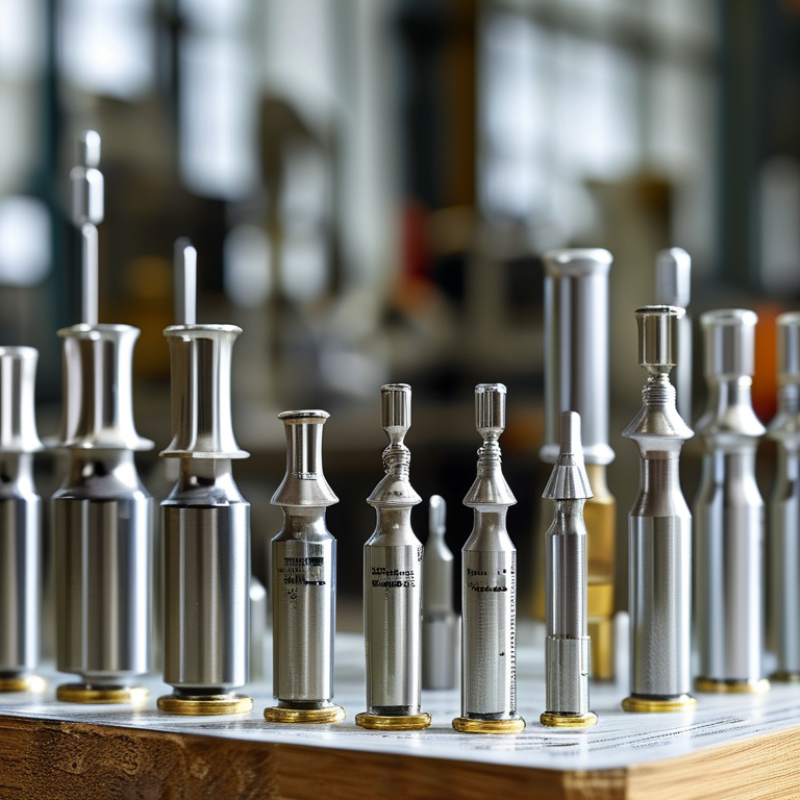
A Luer Lock Needle is a medical needle designed to connect securely with a compatible syringe or tubing. Its threaded hub twists onto the fitting, creating a firmer connection than a simple push-fit design. This structure helps reduce accidental separation during injections, fluid transfer, and certain clinical procedures. TheLuer Lock Nozzle is the matching connection point, usually shaped to support controlled flow and stable attachment.
In practical use, needle selection depends on gauge, length, bevel design, and the fluid being handled. A finer needle may reduce discomfort, while a wider needle can support faster delivery. Compatibility still matters most. A secure thread cannot correct an unsuitable syringe, damaged seal, or poorly aligned connection. Small details matter.
When evaluating China-based manufacturers, buyers should inspect dimensional accuracy, sterile packaging, material traceability, and batch testing records. Clear product drawings are useful, but they are not enough. Sample testing should check thread smoothness, leakage resistance, needle sharpness, and connection stability. It is easy to focus on low pricing. That choice may create hidden handling problems later. Even experienced purchasers can overlook packaging damage or inconsistent hub molding. Reliable suppliers should explain their quality controls without vague promises and provide documentation that supports repeatable production.
Luer lock needle quality begins with recognized standards, not attractive packaging. ISO 80369-7 defines small-bore connector dimensions and performance, reducing misconnections between medical devices. ISO 7864 covers sterile, single-use hypodermic needles, including cleanliness, limits, and functional testing. Needle tubing should also meet ISO 9626 requirements for stainless-steel strength and dimensions.
Biological safety requires further evidence. ISO 10993 guides testing for cytotoxicity, sensitization, irritation, and other biological risks. A manufacturer should provide material records, sterilization validation, leakage results, and batch traceability. ISO 13485 certification supports a controlled quality system, but certification alone is not proof of consistent production. Ask for recent test reports, not only certificates.
The World Health Organization’s 2022 Global Report on Infection Prevention and Control states that healthcare-associated infections affect about 7% of acute-care patients in high-income countries and 15% in low- and middle-income countries. Needle quality cannot prevent every infection, yet poor seals, damaged tips, or visible particles create avoidable risks. Check luer fit with practical samples. Inspect the tip under magnification. Review packaging integrity after transport. Some suppliers may show excellent laboratory data but weak production discipline. That gap deserves attention.
When assessing Chinese Luer Lock Needle manufacturers, begin with evidence rather than polished websites. Ask for manufacturing records, quality certificates, and recent audit reports. A dependable supplier should explain its quality system clearly, including inspection points and corrective actions. ISO 13485 certification is useful, but it should not replace direct verification.
Request production samples from different batches. Examine needle sharpness, hub alignment, connection fit, and protective packaging. Test the Luer Lock Adapter for secure attachment, leakage resistance, and smooth disconnection. Dimensional consistency matters. Small variations can cause problems during clinical use or automated filling. Ask whether materials comply with relevant standards, such as ISO 7864, ISO 9626, and ISO 80369-7, where applicable. Confirm biological evaluation, sterility validation, and packaging shelf-life data for the intended market.
A factory visit can reveal practical details. Observe cleanroom controls, operator training, calibration labels, and rejected-product handling. Also check traceability from raw material to finished carton. Experienced manufacturers usually provide clear sampling plans and realistic production timelines. Be cautious when a supplier promises every specification without asking technical questions. That confidence may be convenient, but it is not proof. I have found that communication quality can expose weaknesses early. Still, a single audit cannot predict every future batch. Keep written specifications, approve a reference sample, and monitor ongoing deliveries with documented inspections.
When choosing a Chinese luer lock needle manufacturer, buyers should examine production depth, not only quotations. The WHO Global Patient Safety Action Plan notes that one in ten patients experiences harm during healthcare delivery. This makes process control a purchasing issue, not a paperwork exercise. Ask whether the factory controls cannula drawing, bevel grinding, cleaning, assembly, and packaging internally. Traceability matters.
A capable facility should show validated equipment, calibrated gauges, and documented inspection points. Check sampling plans for needle dimensions, tip sharpness, leakage, connection strength, and sterility barriers. ISO 13485:2016 expects risk-based quality management throughout medical-device production. However, certification alone proves limited capability. Request recent batch records, nonconformance trends, corrective-action evidence, and environmental monitoring results. Ask for evidence.
Manufacturing flexibility also deserves attention. Can the supplier maintain consistent output across different gauges, lengths, hub materials, and packaging formats? Grand View Research has projected continued growth in the disposable syringes and needles market, increasing pressure on capacity and delivery reliability. Buyers should therefore review monthly capacity, equipment redundancy, lead times, and raw-material controls. A factory may report high capacity, yet seasonal congestion can change reality. I would audit line clearance personally, especially around tiny components and printed labels. Photos help, but direct observation remains stronger.
| Manufacturing Capability | What Buyers Should Examine | Practical Benchmark or Specification | Recommended Evidence | Buyer Priority |
|---|---|---|---|---|
| Medical-Grade Raw Materials | Traceability and control of stainless-steel needle tubing, polymer hubs, protective caps, adhesives, and packaging materials. | Use materials suitable for medical-device applications. Stainless-steel needle tubing should conform to the applicable requirements of ISO 9626. | Material certificates, supplier qualification records, incoming inspection procedures, and lot-traceability samples. | High |
| Needle-Tube Drawing and Cutting | Ability to maintain outside diameter, wall thickness, length, straightness, and cut quality across production lots. | Typical buyer-defined configurations may include 18G–30G sizes and approximately 13–40 mm lengths; final dimensions must match the approved drawing and applicable standards. | Process capability studies, calibrated gauges, dimensional inspection reports, and first-article inspection records. | High |
| Tip Grinding and Beveling | Consistency of bevel angle, lancet geometry, sharpness, burr control, and penetration performance. | The tip should meet the approved needle-point design and the relevant requirements of ISO 7864, with no visible burrs, cracks, or deformation. | Microscope images, bevel-angle measurements, penetration-force testing, visual inspection records, and sampling plans. | High |
| Silicone Lubrication | Uniformity of lubricant application without excessive residue, pooling, particulate contamination, or interference with bonding. | Lubricant type, concentration, application method, and acceptable residue level should be defined in the validated process specification. | Lubricant certificate, coating-process validation, residue testing, equipment-cleaning records, and batch-release data. | High |
| Hub Molding and Luer Lock Formation | Dimensional accuracy, concentricity, flash control, thread integrity, connection security, and compatibility with standard mating components. | The luer-lock connection should be evaluated against ISO 80369-7 or the applicable regulatory requirement for small-bore intravascular and hypodermic connectors. | Mold-maintenance records, dimensional reports, leak tests, pull-off or separation tests, and connector-function test results. | High |
| Needle-to-Hub Bonding | Bond strength, adhesive compatibility, curing control, insertion depth, alignment, and resistance to leakage. | The finished assembly should pass defined bond-strength, leakage, and functional requirements after sterilization and shelf-life conditioning. | Adhesive batch records, curing-parameter logs, bond-strength test data, leak-test results, and aging-study reports. | High |
| Automated Assembly and Inspection | Level of automation, error-proofing, inspection coverage, rejection control, and production-line repeatability. | Critical characteristics such as needle presence, tip damage, hub alignment, cap fit, and packaging defects should be inspected using validated manual or automated methods. | Process flowcharts, poka-yoke records, vision-system validation, rejected-part controls, and production yield data. | High |
| Cleanroom and Environmental Control | Cleanroom classification, personnel gowning, environmental monitoring, particulate control, and contamination-prevention procedures. | The required cleanroom grade should be justified by the product and process. ISO 14644-1 may be used for cleanroom classification, while bioburden limits should be defined through risk assessment and validation. | Cleanroom certificates, particle-count reports, viable monitoring data, differential-pressure logs, and cleaning records. | High |
| Sterilization Capability | In-house or qualified outsourced sterilization, load configuration, dose or cycle control, residual testing, and release procedures. | Ethylene oxide sterilization should be validated to ISO 11135; radiation sterilization should be validated to ISO 11137. Sterility assurance level is commonly specified as 10-6 for terminally sterilized medical devices. | Sterilization validation reports, cycle or dose records, EO residual results where applicable, biological indicators, and release certificates. | High |
| Sterile Barrier and Packaging | Packaging material selection, seal integrity, protective-cap performance, labeling, and resistance to transportation and aging. | Packaging systems should be validated for sealing, integrity, distribution simulation, and accelerated or real-time aging in accordance with applicable ISO 11607 requirements. | Packaging validation protocol, seal-strength data, dye or bubble-leak results, aging reports, and transport-test records. | High |
| Quality Management System | Control of design, purchasing, production, nonconforming product, corrective actions, complaints, and change management. | A medical-device quality system certified to ISO 13485 is a strong baseline for controlled production and traceability. | Current ISO 13485 certificate, certification scope, audit reports, CAPA records, change-control procedures, and complaint-handling process. | High |
| Inspection and Laboratory Testing | Availability of calibrated equipment and qualified methods for dimensional, mechanical, chemical, microbiological, and packaging tests. | Test methods should be documented, validated or verified where required, and supported by calibration traceable to recognized standards. | Equipment lists, calibration certificates, laboratory procedures, method-validation files, and sample test reports. | High |
| Batch Traceability | Ability to trace finished needles back to raw-material lots, operators, machines, molds, sterilization loads, packaging lots, and inspection results. | Each finished-product lot should have a unique identifier and retained records sufficient to support investigation, recall, and regulatory review. | Sample device-history records, lot-number structure, retention policy, electronic traceability screenshots, and mock-recall results. | High |
| Production Capacity and Scalability | Available production lines, validated capacity, lead time, minimum order quantity, surge capability, and continuity planning. | Capacity should be demonstrated using realistic monthly output, utilization assumptions, yield data, and documented expansion plans rather than installed-machine counts alone. | Capacity plan, recent production records, line-balance analysis, on-time-delivery history, and business-continuity plan. | Medium |
| Customization and Design Transfer | Ability to support custom gauges, lengths, bevels, hub colors, thread designs, packaging formats, and private specifications. | The supplier should manage design inputs, risk analysis, verification, validation, and controlled transfer from prototype to routine production. | Design-transfer procedure, sample development timeline, risk-management file, engineering-change records, and pilot-run report. | Medium |
| Regulatory and Export Documentation | Readiness to provide technical files, declarations, certificates, sterilization records, labels, and market-specific documentation. | Documentation should match the target market, product classification, intended use, and applicable requirements for sterile hypodermic needles and luer connectors. | Technical documentation index, declaration of conformity where applicable, test reports, labeling samples, and regulatory-support procedure. | High |
| Post-Market Support and Corrective Action | Responsiveness to complaints, investigation speed, replacement policy, field-action support, and effectiveness checks for corrective actions. | A documented complaint and CAPA process should define investigation timelines, root-cause analysis, risk evaluation, and corrective-action verification. | Redacted complaint records, CAPA examples, response-time metrics, escalation procedures, and recall or mock-recall documentation. | Medium |
China Top Luer Lock Needle Manufacturers How to Choose?
When evaluating Chinese Luer lock needle manufacturers, verify the material before reviewing prices. Ask for resin names, grades, and lot-specific certificates. The connector should match the declared polymer, often polypropylene or another validated medical-grade material. Do not accept “medical material” as sufficient evidence. Check whether the Luer Lock Tip Cap fits securely without cracking, distortion, or excessive force.
Sterility requires more than a printed sterilization symbol. Request the sterilization method, validation records, bioburden results, and endotoxin data where applicable. For sterile products, inspect packaging seals and challenge-test information. A damp carton, crushed pouch, or unclear expiration label deserves attention. During supplier audits, compare production records with the samples you receive. Small differences in cap color or thread shape can reveal process drift.
Product consistency should be tested across several lots, not one attractive sample. Review dimensions, leakage performance, connection strength, particle control, and visual defects. Ask for retention samples and a clear change-notification procedure. Manufacturing under a documented quality system, such as ISO 13485, supports traceability but does not replace independent verification. Paperwork can look perfect. I have learned that factory-floor evidence often tells a different story. Check inspection tools, operator training, and environmental controls in person when possible. Some suppliers may resist detailed questions; that reaction itself needs careful reflection.
Verification checklist for materials, sterility, and product consistency
The chart shows the number of objective evidence items recommended for each purchasing-control area. Material verification should include material certificates, composition or identity checks, and biocompatibility evidence. Sterility verification should include a validated sterilization process, a sterility assurance level target of 10⁻⁶, and routine release records. Product consistency should cover dimensional inspection, Luer connection performance, leakage or functional testing, and packaging integrity. Relevant references include ISO 7864, ISO 80369-7, ISO 10993, ISO 11135, ISO 11137, ISO 17665, and ISO 11607.
When choosing China’s top luer lock needle manufacturers, compare the complete cost, not only the quoted unit price. Grand View Research valued the global hypodermic needles market at approximately USD 6.7 billion in 2023, with continued growth expected. Rising demand can hide production pressure. Ask whether the quotation includes tooling, inspection, sterile packaging, and shipping. A low price may exclude these costs.
Customization needs technical discipline. Confirm gauge, cannula length, hub material, color, bevel design, and packaging format. The connection should follow ISO 80369-7 requirements for small-bore connectors. Request dimensional drawings and sample approval before mass production. Custom tooling can increase the initial charge, but it may reduce assembly problems later. Sometimes, standard parts are safer and cheaper.
Minimum order terms deserve equal attention. One supplier may accept 10,000 pieces, while another may require 100,000. Compare the price at both volumes, including rejected units and storage costs. A 2024 medical-device supply chain analysis by McKinsey noted that procurement teams increasingly evaluate resilience, quality, and total cost together. That matters here. I would not trust a promise without batch records, inspection results, and a clear replacement policy. My own mistake would be judging only the first invoice. A practical comparison sheet should record lead time, sample fees, payment terms, audit access, and capacity evidence.
What questions should you ask before choosing a supplier? Start with manufacturing experience, not attractive pricing. Ask how many years they have produced luer lock components and which markets they serve. Request evidence of a quality system, such as ISO 13485 certification, current audit records, and batch-level traceability. A reliable supplier should explain its resin specifications, mold controls, and dimensional inspection methods clearly.
Ask how each lot is tested. Important checks may include leak resistance, connection fit, tensile strength, and visual defects. If you need Syringe Caps Luer Lock products, confirm compatibility with your syringe materials and sterilization process. Request samples from normal production, not specially selected pieces. Then test them under realistic handling conditions. Small details matter, such as cap threads turning smoothly without excessive force.
Also discuss minimum order quantities, lead times, packaging, change notifications, and complaint response times. Ask whether retained samples and inspection reports are available for every shipment. A supplier that avoids specific answers deserves caution. Still, no checklist is perfect. Your team may overlook packaging damage or temperature exposure during transport. Recheck those risks before approval, and record every decision in writing.
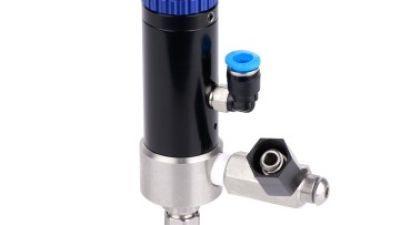
The AC-741GM diaphragm micro impingement needle valve is designed for precise flow control in compact industrial systems. Measuring 27 × 110 mm and weighing only 0.3 kg, it supports equipment designs where installation space, response accuracy, and overall system weight are important considerations. Its diaphragm-based structure can help isolate the controlled medium from the adjustment mechanism, making it suitable for instrumentation, analytical equipment, laboratory gas systems, and process-control assemblies requiring stable micro-flow regulation.
The 2024 Industrial Valves Market Report by MarketsandMarkets estimates that the global industrial valves market will grow from approximately USD 77.7 billion in 2024 to USD 97.7 billion by 2029, representing a compound annual growth rate of about 4.7%. This expansion reflects rising demand for automation, process optimization, and reliable fluid-handling components across manufacturing, energy, water treatment, and chemical applications. The compact dimensions of the AC-741GM align with the industry’s increasing preference for lightweight, modular valve solutions that can be integrated into densely arranged systems. In addition, market research on precision flow-control equipment highlights the importance of repeatable adjustment, leak reduction, and compatibility with automated monitoring, areas in which a micro impingement needle valve can provide practical value.
: ISO 80369-7 covers small-bore connector dimensions and performance. ISO 7864 covers sterile, single-use hypodermic needles. ISO 9626 addresses stainless-steel needle tubing strength and dimensions.
No. It supports a controlled quality system. Request recent test reports, audit records, and batch traceability. Certificates alone are not enough.
Ask for testing related to cytotoxicity, sensitization, irritation, and other biological risks. Review material records and sterilization validation.
Test practical samples from different batches. Check secure attachment, leakage resistance, and smooth disconnection. Inspect threads carefully.
Look for sharp needle tips, aligned hubs, clean surfaces, and intact protective packaging. Magnification can reveal tiny damage. Small defects matter.
Specially selected samples may hide ordinary production variation. Request samples from several regular batches. Compare dimensions, fit, and visible defects.
Observe cleanroom controls, operator training, calibration labels, and rejected-product handling. Trace materials from incoming stock to finished cartons.
Ask about production experience, inspection methods, lot testing, lead times, packaging, and complaint responses. Require clear answers. Vague promises need caution.
Check packaging after transport for crushing, moisture, or broken seals. Review temperature exposure when relevant. We may overlook this risk.
No. A single visit cannot represent every future batch. Approve a reference sample, use written specifications, and document ongoing inspections.
Choosing the right Luer Lock Needle manufacturer in China requires more than comparing prices. Buyers should first understand how the needle is used in medical procedures and evaluate whether the supplier follows recognized quality and safety standards. A reliable manufacturer should demonstrate strong control over design, precision machining, assembly, inspection, packaging, and production capacity. Important factors include the use of appropriate medical-grade materials, validated sterilization processes, clean manufacturing conditions, and consistent performance across different production batches.
Before placing an order, buyers should also compare customization options, minimum order quantities, lead times, warranty policies, and total costs. It is helpful to request product samples, technical documents, quality certifications, inspection records, and clear explanations of testing procedures. Asking about traceability, quality control, after-sales support, and responses to nonconforming products can reveal the supplier’s reliability. By reviewing these areas systematically, buyers can select a qualified Luer Lock Needle manufacturer that offers safe, consistent products and dependable long-term cooperation.