Leave Your Message
0%

Picking the right Automatic UV Curing Machine isn't just about glittering claims of super-fast curing. It really can make or break your production quality, energy bills, and day-to-day costs. When you're shopping around, you’ll want to dig into more than just how quickly it cures. Think about the lamp tech, how fast the conveyor moves, how you control exposure, cooling processes, the size of the machine, and how easy it is to access for maintenance. Sometimes, a machine might cure a coating in a few seconds, but if you’re not careful, you might end up with uneven curing near the edges—that’s a detail you definitely don’t want to overlook.

This guide is here to walk you through the top automatic UV curing machines for 2026, helping you figure out what’s worth your investment. We compare different setups—conveyor systems, chamber models, robotic units, and modular lines—and even look into where a Line Uv Curing Light (been there, done that!) fits into continuous production. Keep in mind, real factory conditions are often a lot messier than showroom demos—dust, heat, reflective surfaces, and substrate variations can all throw off the performance.

Make sure to ask for real proof of performance. Reputable sellers should have irradiance data, wavelength info, test results, maintenance tips, and clear warranty details ready to share. Brands like Heraeus Noblelight, Phoseon Technology, and Dymax are good places to start your research. But remember, no single brand fits all needs—always test with your own inks, adhesives, coatings, and production speeds to be sure it really works for you.

And don’t forget, the small stuff counts too. Check how easy it is to swap out lamps, the accuracy of sensors, operator safety shields, and how quickly support can come to your aid if things go wrong. A fancy brochure might look great, but it won’t keep your production running smoothly.

Also, don’t just assume that maximum power equals the best deal. Sometimes, a lower-energy LED system can do a better job, especially with heat-sensitive materials. This guide aims to help you compare practical options, spot hidden risks, and pick equipment that you can really trust. And honestly, doing a real-world trial before making a final call is a must—there’s no substitute for hands-on testing.
2026 Best Automatic UV Curing Machine Types for Buyers

UV Curing Fundamentals: Wavelengths from 365 to 405 nm and Dose in mJ/cm²

2026 Best Automatic UV Curing Machine Types for Buyers

UV curing depends on wavelength, irradiance, exposure time, and dose. The common range is 365 to 405 nm. A 365 nm source can activate photoinitiators that absorb shorter UV-A wavelengths. A 395 or 405 nm source often penetrates clearer coatings more effectively. The chemistry decides the answer, not the machine brochure.

Dose is measured in mJ/cm². It equals irradiance multiplied by exposure time. For example, 1,000 mW/cm² applied for 2 seconds delivers 2,000 mJ/cm². RadTech’s UV+EB Technology Roadmap reports that LED curing can reduce process energy by up to 70% in suitable applications. However, that figure depends on line speed, cooling, and lamp replacement practices. It should not become a buying promise.

A Point Uv Curing Light may display high irradiance but still cure unevenly. ASTM G154 testing guidance reminds engineers that distance, angle, and exposure conditions affect UV results. IEC 62471 also requires photobiological safety evaluation for optical radiation equipment. Ask for measured dose at the work surface, not only rated output. A neat number can mislead.

I have seen under-cured edges caused by fixture gaps, even when the center passed inspection. Automatic machines need uniform coverage, stable conveyor speed, and calibrated radiometers. Recheck the dose after heat buildup, lens aging, or product changes.

Mercury-Lamp UV Systems: Broad-Spectrum Output and Industrial Throughput

Mercury-lamp UV systems remain a practical choice for automatic curing machines that need broad-spectrum output and steady industrial throughput. Their ultraviolet energy covers several wavelength ranges, helping cure coatings, inks, and adhesives with different photoinitiator responses. In production environments, a conveyor can move parts beneath the lamp at controlled speed. This supports repeatable processing across long operating shifts.

Performance depends on more than lamp power. Technicians should measure irradiance and UV dose at the work surface, not only read the machine display. Lamp age, reflector cleanliness, conveyor height, and substrate color can change the result. A dusty reflector may create uneven curing. Small details matter. Cooling airflow also deserves attention because mercury lamps generate substantial heat. Sensitive plastics may warp before the coating fully cures.

Mercury-lamp systems can deliver excellent throughput, but they are not perfect for every product. Recessed areas and shaded edges may receive insufficient energy. Reflective surfaces can also produce inconsistent results. Buyers should request curing trials using real production materials, target speeds, and actual coating thicknesses. Keep records of lamp hours and dose readings. This makes maintenance decisions more reliable. One common mistake is selecting the strongest lamp available. Higher intensity may increase heat, energy use, and substrate stress without improving adhesion. A balanced setup is usually more dependable.

UV LED Curing Machines: 365–405 nm Emission, Low Heat, and Instant Start

For buyers comparing 2026 automatic UV curing machines, LED wavelength matters more than glossy speed claims. UV LED systems commonly emit 365, 385, 395, or 405 nm. The correct band depends on the adhesive, ink, coating, and photoinitiator response. Ask for measured irradiance, not only rated power. A calibrated radiometer should verify output at the working distance. Small gap changes can reduce curing energy sharply. This is where many purchasing tests fail.

A Surface Uv Curing Light can deliver focused energy across a narrow work area, while conveyor and robotic systems suit repeated production. LED sources start instantly, without warm-up, mercury lamps, or frequent shutter cycles. They also produce less radiant heat, protecting heat-sensitive plastics, films, and electronic parts. Still, low heat does not mean cold operation. Dense arrays can warm a part, especially during slow indexing. Ventilation and temperature checks remain useful. I have seen surfaces feel safe while the adhesive underneath remained soft.

Automatic controls should record exposure time, intensity, distance, and fault alarms. Interlocks, shielding, and operator access controls support dependable use. Buyers should test the real substrate, not a sample coupon alone. Check tack, hardness, adhesion, and cure depth after production-speed exposure. A 405 nm system may look bright but cure poorly with an incompatible formulation. Wavelength matching is non-negotiable. One honest limitation deserves attention: LED output can decline with age, and cleaning may be overlooked. Schedule verification instead of trusting the display.

Conveyor UV Curing Units: Irradiance, Belt Speed, and Energy-Dose Control

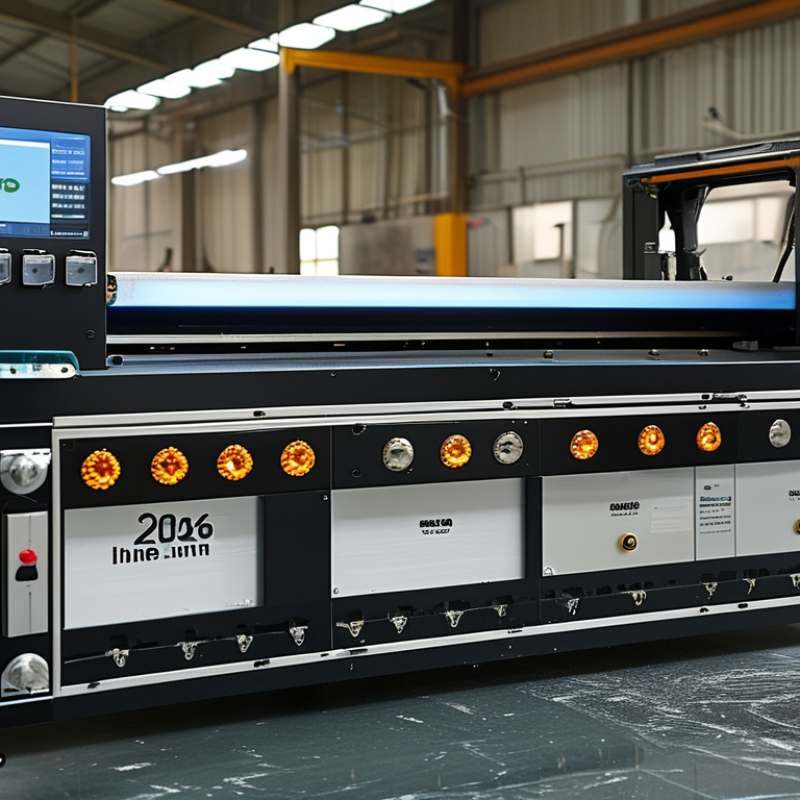
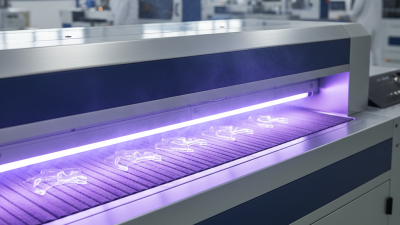
Conveyor UV curing units are practical when production needs repeatable curing across many parts. Their performance depends on three linked controls: irradiance, belt speed, and energy dose. Irradiance describes UV power reaching the surface, usually measured in watts per square centimeter. Belt speed controls exposure time beneath the lamp. A faster belt usually reduces the delivered dose.

Energy dose is calculated from irradiance and exposure time, commonly in joules per square centimeter. For example, doubling belt speed can nearly halve exposure time if the curing zone stays unchanged. That simple relationship can be misleading. Lamp distance, reflector condition, material color, and part geometry also affect the result. Dark coatings may need more energy than clear coatings. Recessed surfaces can remain soft when exposed areas appear fully cured.

A dependable setup uses a calibrated UV radiometer, not visual inspection alone. Operators should record irradiance at several belt positions and check the lamp after warm-up. Small changes matter. A belt moving at 8 meters per minute may require different settings after lamp aging or line maintenance. I have seen test panels cure well while production parts failed because their height created uneven exposure. That mistake is easy to repeat. Buyers should request dose verification, temperature limits, speed adjustment range, and maintenance records. The control screen may show stable numbers, but the actual surface dose still deserves periodic rechecking.

How to read the chart: Higher irradiance improves peak curing intensity, while slower belt speed generally increases energy dose. The displayed dose values are representative conveyor-UV operating targets and depend on lamp length, working distance, substrate reflectivity, and exposure uniformity.

Spot and Flood UV Curing Types: Choosing Area Coverage from mm to cm

When comparing 2026 automatic UV curing machine types, area coverage matters more than impressive power ratings. Spot curing systems concentrate ultraviolet energy on small targets, often from a few millimeters to roughly 10 mm. They suit optical parts, tiny adhesive joints, sensors, and repairs around delicate surfaces. The beam stays controlled, so nearby materials receive less exposure. However, alignment becomes critical. A slight shift can leave one edge under-cured.

Flood curing systems cover wider areas, usually from several centimeters to larger panels. They work well for printed layers, coated surfaces, and multiple parts arranged on a fixture. Flood exposure improves production consistency when the workpiece size stays stable. It can also create unwanted heat or shadows. Measure the actual curing zone, not only the lamp window. Fixtures, part height, and reflective surfaces change coverage in practice.

Buyers should record adhesive thickness, curing distance, exposure time, and required wavelength before choosing equipment. A narrow spot head may be efficient for one joint but slow for hundreds. A flood source may save handling time, yet waste energy around small parts. I have seen operators select machines by wattage alone, then adjust the process repeatedly. That approach is unreliable. An Automatic glue coating machine may also need coordinated curing, especially when coating width changes from millimeters to centimeters. Test real samples under production conditions. Check surface tack, bonding strength, temperature, and shadowed edges. The first setup is rarely perfect. Even a careful specification can miss a practical limitation.

2026 Best Automatic UV Curing Machine Types for Buyers - Spot and Flood UV Curing Types: Choosing Area Coverage from mm to cm
Machine Type Typical Curing Area Typical Working Distance Common UV Wavelengths Typical Irradiance at the Work Surface Typical Exposure Time Suitable Part Size Automation and Motion Best Application Fit Main Buying Consideration
UV LED Spot Curing Machine 2–8 mm diameter 3–15 mm 365, 385, 395 or 405 nm 2–20 W/cm² 0.2–10 seconds Small parts, narrow joints and localized bonding points Fixed head, pneumatic head, or programmable multi-axis positioning Optical bonding, small electronic components, sensors and miniature assemblies Match the light spot diameter and wavelength to the adhesive and joint geometry
Multi-Point UV Spot Curing Machine Multiple spots of 2–10 mm each 3–20 mm 365, 385, 395 or 405 nm 1–15 W/cm² per channel 0.5–15 seconds Parts requiring simultaneous curing at several defined locations 2–16 independently controlled UV channels; sensor or PLC triggering Multi-point adhesive fixing, connector assembly and repeatable component placement Check channel-to-channel irradiance consistency and independent intensity control
Fiber-Optic UV Spot Curing Machine 1–6 mm at each fiber outlet 0–10 mm, depending on the light guide 365, 385, 395 or 405 nm 0.5–12 W/cm² 0.5–20 seconds Confined areas, recessed joints and assemblies with limited access Flexible or fixed light guides; optional automatic indexing Small cavities, medical-device subassemblies and precision optical components Verify light-guide bending radius, outlet size and transmission at the selected wavelength
UV Laser Curing System 0.1–2 mm focused spot Configured by optical system Commonly 355 or 405 nm Process-specific; may be very high at the focused point Milliseconds to seconds Very small bonding lines, marks or precision-defined areas Galvanometer scanning, CNC motion or robotic positioning Micro-assembly and highly localized curing where a conventional LED spot is too large Evaluate heat input, optical safety, beam quality and process validation requirements
Small-Area UV LED Flood Machine 20 × 20 mm to 100 × 100 mm 10–80 mm 365, 385, 395 or 405 nm 0.5–8 W/cm² 2–60 seconds Small flat parts and several components arranged in a fixture Timed exposure, drawer or hinged chamber, and fixture indexing Gaskets, coatings, labels, encapsulation and batch curing of small assemblies Confirm uniformity across the entire exposed area, not only the center point
Medium-Area UV LED Flood Machine 100 × 100 mm to 300 × 300 mm 30–150 mm 365, 385, 395 or 405 nm 0.3–5 W/cm² 5–120 seconds Medium trays, panels and multiple parts in one cycle PLC-controlled exposure, automatic door, tray loading or conveyor integration Protective coatings, adhesive layers, printed components and medium-size assemblies Use irradiance mapping to identify edge falloff and shadowing before production approval
Large-Area UV LED Flood Machine 300 × 300 mm to 600 × 600 mm 50–250 mm 365, 385, 395 or 405 nm 0.2–3 W/cm² 10–180 seconds Large panels, trays and multiple workpieces positioned together Automatic loading, conveyor transfer, recipe control and safety interlocks Large-area coating, industrial bonding and batch processing Consider LED module replacement, thermal management, chamber access and energy use
UV Conveyor Curing Machine 100–600 mm conveyor width 50–200 mm above the conveyor 365, 385, 395 or 405 nm 0.5–8 W/cm² Controlled by belt speed; commonly 1–120 seconds Continuous parts, printed materials and repeatable production batches Variable-speed conveyor, encoder feedback, recipe storage and automatic interlocking High-throughput adhesive, ink, coating and surface-treatment processes Calculate UV dose from irradiance and exposure time, then validate the minimum dose at line speed
UV Cabinet or Chamber Curing Machine Approx. 200 × 200 × 200 mm to 800 × 800 × 800 mm chamber volume Determined by chamber layout 365, 385, 395 or 405 nm 0.2–5 W/cm² 10 seconds to several minutes Three-dimensional parts, fixtures and batch-loaded assemblies Door interlock, timer, recipe control, rotating fixture or programmable indexing Complex shapes that need enclosed and repeatable batch exposure Check internal dose uniformity, ventilation, thermal limits and usable chamber dimensions
Hybrid Spot-and-Flood UV Curing Machine Spot heads of 2–10 mm plus flood zones of 50–300 mm 3–150 mm, depending on the head Single or multiple wavelengths, typically 365–405 nm Spot: 1–20 W/cm²; Flood: 0.3–8 W/cm² 0.2–120 seconds Assemblies with both localized joints and broad coated surfaces Independent head control, PLC recipes, indexing table and process sensors Complex products requiring tack curing followed by full-area curing Confirm that each curing zone has separate intensity, timing and dose verification
Buyer reference: The listed values are typical engineering ranges for automatic UV LED curing equipment, not guaranteed machine specifications. Actual performance depends on wavelength, adhesive or coating chemistry, optical distance, workpiece reflectivity, temperature, fixture design, shielding and measured UV dose. For selection, request an irradiance map and validate the complete curing process with the actual material and part geometry.

Automatic UV Curing Selection: Matching 1–20 W/cm² Output to Materials

Automatic UV curing selection starts with material behavior, not maximum lamp output. A 1 W/cm² system may suit thin, clear adhesives that cure slowly without overheating. Materials with pigments, fillers, or deeper layers often need 5–10 W/cm². Dense coatings used in fast production may require 15–20 W/cm². Higher power is not automatically better. It can harden the surface while the lower layer remains soft.

Match irradiance with exposure time, distance, and wavelength. A calibrated radiometer should measure light at the product surface, not only near the lamp. Conveyor speed also matters. Moving too quickly can leave a tacky film around edges, holes, or shaded joints. Moving too slowly may discolor heat-sensitive plastics. Small tests help. Record surface temperature, curing depth, hardness, and adhesion after cooling.

An Automatic conformal coating machine needs similar attention when UV coating protects circuit assemblies. Check component shadows, coating thickness, and lamp access before choosing 1–20 W/cm² output. Reflective metal parts can create uneven exposure, while deep connectors may need angled lamps or a secondary pass. In my experience, supplier charts are useful, but they rarely replace a real production trial. One test panel is not enough. Recheck results after lamp aging, because output gradually changes and operators may overlook it.

2026 Buyer Checklist: Safety, Cooling, Maintenance, and Process Validation

Buying an automatic UV curing machine should begin with operator safety, not speed or output claims. The enclosure must block stray UV radiation from every viewing angle. Interlocked doors should stop curing immediately when opened. Emergency stops need clear access and routine testing. Operators still require suitable eye and skin protection during setup. Do not trust appearance alone. A small UV meter can reveal exposure near seals, gaps, and access panels. Keep these readings with the machine records.

Cooling affects both product quality and component life. Check airflow around lamps, LEDs, power supplies, and exhaust filters. A clogged filter can raise internal temperature within minutes. Ask how temperatures are displayed and alarmed. Maintenance should include cleaning optical surfaces, inspecting cables, checking fans, and replacing worn seals. Use a written schedule with named responsibilities. It is easy to postpone cleaning when production is busy. That mistake becomes expensive.

Process validation should connect UV dose, intensity, wavelength, conveyor speed, working distance, and substrate temperature. Test the cured surface with practical methods, such as adhesion, hardness, or chemical resistance checks. Record results from the first approved run, then compare later batches. Early trials can look successful while hidden under-curing remains. I would challenge any acceptance test using only one sample. Revalidate after lamp replacement, software changes, material changes, or major maintenance. A checklist cannot replace judgment, but it can expose weak assumptions before they reach customers.

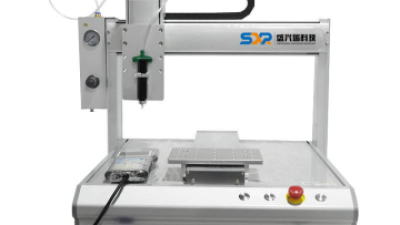
Desktop Servo Automatic Dispensing Machine SXR-300EDS: Features, Applications, Benefits, and Buying Guide

Desktop servo dispensing is becoming increasingly important as manufacturers seek repeatable, low-waste application of adhesives, sealants, solder pastes, and protective coatings. A MarketsandMarkets report projects continued growth in the global automated dispensing systems market, driven by electronics miniaturization, electric vehicle production, and demand for process consistency. The SXR-300EDS addresses these requirements with a servo-controlled three-axis platform and a 300 × 300 × 100 mm working schedule, supporting accurate point, line, and arc dispensing in a compact desktop format.

Measuring 520 × 580 × 620 mm and weighing approximately 18 kg, the machine is suitable for laboratories, pilot production lines, repair stations, and small-batch manufacturing environments. Its compact footprint helps conserve valuable workspace, while automated motion can reduce operator fatigue and improve repeatability compared with manual dispensing. Typical applications include PCB assembly, camera modules, sensors, LED components, battery-related parts, and mechanical sealing. Industry 4.0 research published by the International Federation of Robotics also highlights the growing role of compact automation in improving productivity and standardizing repetitive processes.

When purchasing a desktop servo dispensing machine, buyers should evaluate coordinate accuracy, compatible Dispensing Valves, material viscosity, programmable path control, cleaning requirements, and after-sales support. The 300 mm × 300 mm work area should be matched to the largest component or fixture, while the 100 mm Z-axis range should accommodate product height and tooling. For flexible production, confirm whether the system supports recipe storage, adjustable dispensing speed, and integration with inspection or curing equipment.

FAQS

: What does UV curing dose mean?

: Dose is irradiance multiplied by exposure time. For example, 1,000 mW/cm² for two seconds delivers 2,000 mJ/cm². Measure it at the work surface.

Which wavelength should a UV curing machine use?

Common choices include 365, 385, 395, and 405 nm. The adhesive, ink, or coating determines the suitable wavelength. Do not choose from machine brightness alone.

Is 365 nm better than 405 nm?

Not always. A 365 nm source suits some shorter-wavelength photoinitiators. A 395 or 405 nm source may penetrate clear coatings more effectively. The formulation decides the result.

Why can a strong UV source still cure unevenly?

Distance, angle, gaps, and exposure time affect delivered energy. An edge may remain soft while the center passes inspection. A neat number can mislead.

Are UV LED curing machines suitable for heat-sensitive parts?

Often, yes. LED sources produce less radiant heat than some traditional sources. They can suit plastics, films, and electronic parts. Dense arrays still create heat.

Do LED curing systems need warm-up time?

Usually, they start instantly. They avoid warm-up delays and repeated shutter cycles. However, instant start does not guarantee uniform curing.

What should automatic curing equipment record?

It should record exposure time, intensity, distance, and fault alarms. Stable conveyor speed also matters. Small gap changes can reduce curing energy sharply.

How should buyers verify curing performance?

Test the real substrate at production speed. Check tack, hardness, adhesion, and cure depth. A sample coupon may hide problems.

How often should UV output be checked?

Recheck output after heat buildup, lens aging, cleaning, or product changes. Use a calibrated radiometer at the working distance. Displays can drift. I have trusted them too much.

Conclusion

Choosing the right Automatic Uv Curing Machine in 2026 requires a clear understanding of wavelength, dose, irradiance, and production requirements. UV curing systems commonly operate between 365 and 405 nm, while curing dose is measured in mJ/cm². Mercury-lamp systems provide broad-spectrum output and strong industrial throughput, whereas UV LED machines offer low heat, instant starting, and efficient wavelength control. Buyers should also compare conveyor, spot, and flood curing types according to workpiece size, coverage area, belt speed, and energy-dose needs.

A reliable selection should match output levels from 1 to 20 W/cm² with the material, coating, adhesive, and required curing speed. Conveyor units are suitable for continuous production, while spot and flood systems provide greater flexibility for localized or larger-area curing. Before purchasing, evaluate shielding, operator safety, cooling performance, lamp or LED maintenance, process monitoring, and validation procedures to ensure consistent results, stable operation, and long-term productivity.

Ethan

Ethan

Ethan is a dedicated marketing professional at Shenzhen Anyco Automation Equipment Co., Ltd., a national high-tech enterprise established in 2013. With a strong expertise in automated fluid control equipment and accessories, he plays a pivotal role in enhancing the company’s visibility and reach.......
Previous China Best Syringe Back Plug for Global Suppliers?