When it comes to controlling fluids, Spray Valves are pretty essential tools. They help manage how liquids flow, making sure everything stays precise and efficient. Whether it’s in manufacturing, farming, or other industries, these valves are everywhere — really versatile. But honestly, picking out the right spray valve can sometimes feel a bit overwhelming. I mean, there are so many options out there, each with its own set of features. Some work great under certain conditions, while others might fall short. People often get stuck deciding between brands like SprayTech or Valco, weighing factors like pressure, flow rate, and what materials are compatible. As we take a look at the top 10 Spray Valves for smooth and effective fluid control, it’s important to understand what specifics you actually need. Reflecting on past experiences or previous choices can also help a lot in making better decisions. Every valve has its strengths and weaknesses, but in the end, they all add up to how well the whole system performs — it’s all about finding the right fit for your particular setup.

Overview of Spray Valves in Fluid Control Applications
Spray valves are crucial in fluid control applications across various industries. They regulate the flow, spray pattern, and droplet size of the liquid. According to recent industry reports, the global spray valve market is projected to reach $1.5 billion by 2025. This growth highlights the increasing demand for efficient fluid management solutions in manufacturing and agriculture.
In practical terms, selecting the right spray valve can enhance operational efficiency. A well-chosen valve can significantly reduce waste and improve product consistency. For instance, fine-tuning spray angles can lead to more uniform application, minimizing overlap and ensuring optimal coverage. Interestingly, some companies still struggle with subpar valve selection. This can result in increased operational costs and inefficiencies.
Furthermore, advancements in technology are influencing spray valve design. Innovative materials and precise engineering are leading to valves that can handle varying fluid viscosities. Reports show that the efficiency of modern spray valves can improve by over 30% compared to older models. However, not all users recognize the importance of upgrading their equipment, often delaying needed changes. This hesitation can hinder overall productivity.
Key Features to Consider When Selecting Spray Valves
When selecting spray valves, consider key features that enhance efficiency. One important feature is the spray pattern. A fine mist may be ideal for certain applications, while a solid stream works better in others. Knowing the right spray pattern helps ensure better fluid control.
Another crucial factor is the valve material. Common materials include stainless steel and plastic. Stainless steel is durable, while plastic can be lighter and more cost-effective. Think about the fluid type as well. Some liquids may react with specific materials, making compatibility vital.
**Tip:** Always test the valve in a controlled environment. This step ensures that it performs as expected. Also, assess the ease of maintenance. Valves that are hard to clean can lead to downtime. Regular maintenance is essential for long-term efficiency.
Lastly, consider the valve's flow rate. An optimal flow rate ensures that you achieve desired results without wasting resources. If the valve's flow is too high, it may lead to overspray. Balancing these features is essential for an effective spray system.
Top 10 Spray Valves for Diverse Industrial Needs
In the world of industrial applications, spray valves play a vital role. They are essential for precise fluid control. The right valve can enhance efficiency and reduce waste. Many industries rely on these valves for various tasks. Spray valves are used in painting, cooling, and even food processing. Each application demands specific features.
When selecting a spray valve, consider the material. It should withstand the fluid's chemical properties. A mismatch can lead to failures. Pay attention to the spray pattern, as it affects coverage. Sometimes, a narrow spray is better for detailed work. Other times, a wide spray covers larger areas quickly.
Tips: Always evaluate the pressure requirements. High pressure can improve the spray distance but may create unwanted overspray. Experiment with different settings to find the optimal balance. Regular maintenance is crucial. A clogged valve can lead to inconsistencies in application, wasting resources and time.
The options can be overwhelming. Research is essential, yet many rush into decisions. Reflect on past experiences with spray valves. What worked? What didn’t? Learning from these moments is key to making better choices. Understanding diverse needs allows for tailored solutions in this varied industrial landscape.
Comparative Analysis of Leading Spray Valve Brands
In the field of fluid control solutions, spray valves play a critical role. Their efficiency can vary significantly among brands. A recent industry report highlighted that approximately 25% of all fluid control failures stem from poorly designed spray valves. This statistic emphasizes the importance of selecting the right valve for the application at hand.
When comparing leading spray valve brands, several factors come into play. One of the most crucial is the spray pattern. A study found that a well-designed spray pattern can improve fluid distribution by up to 30%. This makes it vital to understand whether you need a cone, flat, or specialized spray pattern for your application. User reviews often indicate that even slight adjustments in nozzle design can lead to better efficiency.
Tip: Always assess the operating pressure of your system. Many users overlook this aspect. Proper pressure can enhance the spray pattern significantly.
Another critical area is the material used in valve construction. Some materials resist corrosion better than others, extending the valve's lifespan. Research shows that stainless steel valves can last up to 40% longer in harsh conditions. However, they may come with higher upfront costs. Evaluating the long-term benefits against initial expenditures is essential.
Tip: Don’t hesitate to seek feedback from industry peers. They can offer valuable insights that published data might not cover. Look for user experiences that discuss real-world applications and limitations.
Maintenance Tips for Optimal Spray Valve Performance
To ensure optimal spray valve performance, regular maintenance is crucial. Many industry reports suggest that nearly 30% of fluid control issues stem from poor maintenance. Neglecting valve care can lead to decreased efficiency and increased operational costs. Cleaning spray nozzles regularly can significantly enhance their lifespan and output consistency. A study from Fluid Dynamics Journal indicated that routine checks can improve performance by up to 15%.
Proper alignment is another key aspect. Misalignment can result in uneven spray patterns and wasted materials. The International Society of Fluid Control noted that incorrect nozzle positioning can lead to a 20% increase in fluid usage. Regular inspection is vital. Look for signs of wear or damage in seal components. Even minor deterioration can affect performance. Addressing small issues early often prevents larger problems down the line.
Finally, storing spray valves correctly is often overlooked. Extremes in temperature can impact their lifespan. It’s advisable to store them indoors, in a controlled environment. A recent engineering report emphasized that proper storage may extend functionality by 10-25%. Reflecting on these maintenance tips can help in enhancing both efficiency and cost-effectiveness.
Innovations in Spray Valve Technology and Design
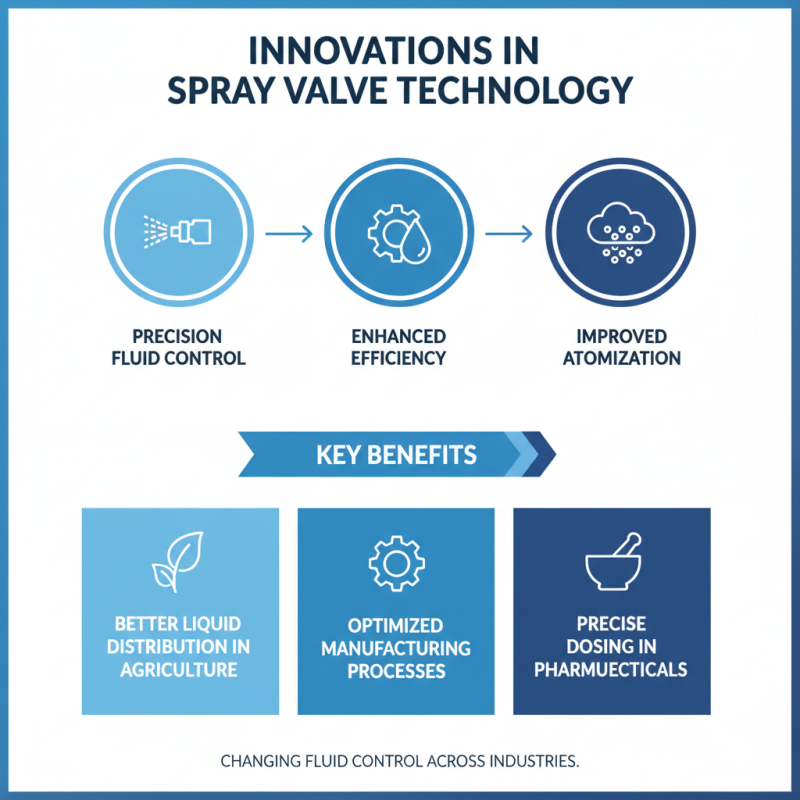
Innovations in spray valve technology have dramatically changed fluid control. Advanced designs now focus on precision and efficiency. Improved atomization features allow for better distribution of liquids. This is crucial in industries like agriculture, manufacturing, and pharmaceuticals.
New materials also play a key role. Lightweight and resistant alternatives enhance durability. Often, these valves incorporate smart technology. Sensors can monitor flow rates, providing real-time data. Despite these advancements, challenges remain. Not every spray valve performs seamlessly in varying conditions. Adjustments are sometimes needed for optimal function.
Moreover, user-friendly designs are becoming essential. Intuitive adjustments make operation simple. However, complications can arise during installation. Therefore, proper training and supports are vital. This balance between innovation and practicality is essential for effective fluid control solutions.
Future Trends in Spray Valve Development and Usage
The future of spray valve technology is evolving rapidly. Industry reports highlight that the global spray valve market is expected to grow by over 5% annually. This growth stems from increasing demand for precision fluid control across various sectors. Enhanced automation and smart technologies are driving these developments. Companies are integrating IoT solutions, enabling real-time monitoring and control.
As manufacturers seek to optimize performance, advancements in materials are crucial. Lightweight, durable materials can enhance the longevity of spray valves. Reports suggest that valves made from advanced polymers could reduce weight by nearly 30%. However, some industries still rely on traditional materials, reflecting a reluctance to adapt.
Tips: When selecting spray valves, consider compatibility with your fluid type. A misaligned choice can lead to inefficiencies. Regular maintenance can extend valve life and performance significantly.
The emphasis on sustainability is another notable trend. Companies are focusing on eco-friendly designs to reduce waste. However, achieving a perfect balance between efficiency and environmental impact remains a challenge. Exploring renewable materials could be a key solution, yet many are still in developmental stages.
Optimizing Your Spray Painting Process: Exploring the Benefits of the 200*20 Water-cooled Spray Painting Light Source and Main Unit
The 200*20 water-cooled spray painting light source represents a significant advancement in UV curing technology, particularly for spray painting applications. With dimensions of 246*64*43 mm, this compact light source is specifically designed to optimize the curing process, ensuring that coatings achieve maximum durability and adherence. The integration of a main unit sized at 610*328*507 mm enhances operational efficiency, providing a robust platform for dual-head configuration which allows for greater coverage and quicker curing times.
Recent industry reports indicate that effective UV curing can reduce production times by up to 50% compared to traditional curing methods. By employing a dual-head design, the 200*20 light source enables operators to target multiple areas simultaneously, thereby increasing throughput without sacrificing quality. The technology not only improves speed but also enhances precision; the adjustable knob and external control options provide users with the flexibility to tailor the curing process according to specific project requirements.
Moreover, the water-cooled feature is critical for maintaining optimal operating temperatures, which further extends the lifespan of the light source and ensures consistent performance. As manufacturers seek to maximize efficiency and minimize waste, investing in high-performance solutions like this water-cooled spray painting light source is likely to yield significant returns on investment, ultimately leading to enhanced product quality and customer satisfaction.
FAQS
: This product aims to enhance everyday experiences in various activities. It helps make tasks more enjoyable.
Users often find it intuitive. However, some may feel overwhelmed by initial features. Simplicity matters.
It’s vital to assess your actual needs. Some features may seem attractive but may not suit everyone.
Yes, users report occasional technical glitches. Feedback loops are important for improvements. Patience is needed.
Usage frequency depends on individual preferences. Some may use it daily while others once a week may suffice.
Results may vary. Some users feel the impact quickly, while others find gradual changes more reliable.
Support is available. However, response times may vary. Self-help resources could be useful too.
Many users report straightforward setup. Yet, for some, certain steps can be confusing. Clarity is essential.
It welcomes user suggestions. However, not all feedback leads to changes. Understanding the process helps.
Some users mention needing extra items for full functionality. Assess requirements before committing to the purchase.
Conclusion
Spray valves play a crucial role in fluid control applications across various industries, offering precise fluid dispensing, efficient atomization, and optimized performance. When selecting spray valves, it's essential to consider key features such as flow rate, spray pattern, and material compatibility to ensure they meet specific operational requirements.
The top 10 spray valves highlighted in this article cater to diverse industrial needs, showcasing a comparative analysis of their functionality and adaptability. Furthermore, maintenance tips are provided to help users achieve optimal performance over time. As innovations in spray valve technology continue to emerge, future trends indicate a shift towards enhanced efficiency and automation, further solidifying the importance of spray valves in modern fluid control solutions.