Leave Your Message
- Phone
- E-mail
- Whatsapp

- Whatsapp

In the ever-changing world of fluid dynamics, new tech keeps pushing the boundaries, leading to some pretty innovative ways to improve mixing. Have you heard about Static Mixing Tubes? They've really shaken things up — their unique design means no moving parts, which not only makes blending fluids more efficient but also cuts down on energy use and maintenance costs.
I came across a market report from Grand View Research that says the global market for these mixers could hit around USD 490 million by 2025. That just shows how much industries are craving smarter, more efficient mixing solutions.  Also, a quick shoutout to Shenzhen Anyco Automation Equipment Co., Ltd.—they've been around since 2013 and are really leading the charge in this space. They do a great job blending research, top-quality manufacturing, and excellent customer service, all aimed at making fluid mixing smoother and better through their clever Static Mixing Tube products.
Fluid dynamics is such a fascinating area—it really explains how fluids move and react under different forces. One of the key ideas here is turbulence, which is huge when it comes to mixing stuff effectively. Basically, turbulence stirs things up by creating chaotic flow patterns, which in turn boosts the interaction between different layers of fluid. This chaos increases the surface contact between components, making the whole blending process a lot smoother and more uniform. In industrial settings, knowing how to control and tweak these flow patterns is super important because it helps you optimize processes and get high-quality results.
Oh, and when you're trying to improve your mixing, don’t forget to pay attention to things like flow rate and viscosity. Turning up or down the pump speed can help generate just the right turbulence without putting too much stress on your equipment. Also, adding static mixing tubes can make a big difference—they help distribute the fluids evenly and cut down on those pesky dead zones where unblended fluid can hang out.
Another thing to keep in mind is the design of your mixing setup. The shape and arrangement of mixing tubes really matter—they can influence how well the fluids interact. Features like baffles or helical structures can create a more effective environment for mixing, maximizing contact between the ingredients. Understanding these design details can help engineers and operators pick the best equipment for whatever their specific needs are.
And here’s a tip: keep an eye on how your mixing system performs regularly, and don’t be scared to tweak things here and there. Sometimes, small adjustments can make a huge difference in both efficiency and product quality. If you can, try using flow visualization techniques—they can really help you see what’s going on inside and give you clues to fine-tune your process even better.
In the modern industrial landscape, the demand for precision and efficiency has never been greater. The use of static mixing tubes presents an innovative solution for precise dispensing in various applications, leveraging their unique design to enhance mixing efficiency. According to a recent industry report, the global market for static mixers is projected to reach $4.5 billion by 2025, reflecting a growing recognition of their advantages in enhancing product consistency and reducing waste.
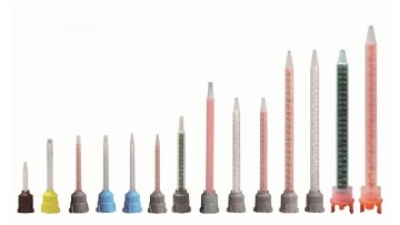
Static mixing tubes, available in a variety of materials, cater to diverse industrial needs. For instance, polypropylene (PP) tubes are an economical choice, offering disposability and resistance to a wide range of chemicals at temperatures up to 80°C, making them ideal for applications where cost efficiency is crucial. On the other hand, stainless steel (316L) options provide durability and can withstand higher temperatures up to 250°C, making them suitable for more demanding environments that require autoclave-safe materials. Additionally, PTFE-lined tubes present a non-stick surface ideal for handling silicone and urethane adhesives, ensuring a more seamless and efficient dispensing process.
The adoption of static mixing tubes in industries such as pharmaceuticals and automotive manufacturing has shown significant improvements in production efficiency. Reports indicate that users have experienced reductions in cycle times by up to 30% and an increase in overall product yield. This technology not only maximizes efficiency but also supports stringent quality control standards, ensuring that products meet regulatory requirements without compromising on performance. As industries continue to evolve, the integration of advanced dispensing solutions like static mixing tubes will undoubtedly play a crucial role in shaping a more efficient future.
: Key factors include the geometry of the mixer, baffle design, and material properties. These aspects significantly impact fluid flow patterns and mixing efficiency.
Baffle design, especially with variations in inclination angles and spacing, can greatly affect the mixing outcome, enhancing overall mixing characteristics.
Different materials can affect flow dynamics and mixing performance. Advances in material selection using AI can lead to improved efficiency in specific applications.
Common issues include inadequate mixing due to improper flow rates and clogging caused by high-viscosity materials or particulate matter.
Ensuring balanced flow rates of the components being mixed is crucial. Utilizing flow monitors can help adjust these rates in real time for better mixing.
Regular maintenance and cleaning are essential to prevent blockages caused by high-viscosity materials or particulate matter.
Choosing an appropriate configuration that minimizes dead zones can facilitate smoother flow and improve mixing efficiency.
Static mixing tubes allow for efficient and uniform mixing of fluids without moving parts, essential in many industrial applications.
By addressing common challenges like flow rate imbalances and clogging, industries can achieve optimal mixing results and improved output quality.
Innovations in artificial intelligence techniques are aiding in better material selection and geometric design for optimized mixing processes.
Hey, so I came across this article titled "Unlocking the Secrets of Fluid Dynamics: How Static Mixing Tubes Change the Game in Mixing Processes"—and I have to say, it really dives into how fluid dynamics play such a crucial role in making mixes work better. It breaks down the basic principles of how fluids behave, which actually helps improve mixing efficiency. Plus, it explains how static mixing technology works, which is pretty fascinating. The article also goes into the design stuff—talking about what really matters when it comes to static mixing tubes and how those details can make a big difference in how well they perform across different industries.
Oh, and they don’t stop there. They chat about common issues people run into with static mixing tubes and give some tips on troubleshooting. It’s pretty useful if you’re dealing with these systems regularly. They also look ahead, discussing trends and cool innovations in mixing tech that could totally shake things up in the near future. As a high-tech company based in Shenzhen, Anyco Automation is really in a great spot to take advantage of these new developments. They’re working on smarter, more efficient fluid control solutions that can help improve processes everywhere.
All in all, it’s a pretty interesting read if you’re into how stuff gets mixed and how tech is evolving in that space.