Picking out the right dispensing valves really can make a big difference in how smoothly your production runs. I mean, as John Smith from FluidTech Solutions, a real pro in fluid handling, puts it: “The right valve can make or break your process.” That just goes to show, you gotta be pretty careful when you're choosing the right one.
When you're checking out different Dispensing Valves, there are a few key things to keep in mind — stuff like what materials they’re compatible with, how fast they flow, and what kind of pressure they need. What works perfectly in one setup might totally flop in another, so don’t overlook that. Also, a lot of folks forget about maintenance — a quick check now and then can save you a lot of headaches down the line, like downtime or inconsistent results.
And yeah, most manufacturers have decent options, but not all valves are created equal. A common mistake is just going for the cheapest one without thinking about how it’ll hold up over time. It’s really worth taking a moment to compare the upfront cost with how reliable and long-lasting it is. Thinking about these little details can help you make smarter choices in the long run.

Understanding the Basics of Dispensing Valves
Dispensing valves are essential in various industries, including food, pharmaceuticals, and manufacturing. Understanding their basics is crucial for effective selection. These valves control the flow of liquids, pastes, and even powders. They serve diverse applications, from filling containers to applying coatings. According to industry reports, over 30% of production downtime is linked to dispensing valve failures. Choosing the right one is vital to minimize this risk.
When selecting dispensing valves, consider the material compatibility. For example, certain chemicals can degrade valve components. This can lead to leakage or contamination. It’s also important to think about the viscosity of the material being dispensed. A valve that works well with water-based solutions may not perform effectively with thicker substances.
Tips: Always test a valve with the specific material before full-scale production. Assess the valve design—some are easier to clean than others. Regular maintenance schedules can prevent unplanned downtimes. Evaluate your needs carefully; the wrong valve can compromise your entire operation. Each application is unique, and finding a one-size-fits-all solution often leads to issues. The process might not be straightforward but reflecting on your choices is essential.
Identifying Your Specific Application Requirements
Identifying your specific application requirements is crucial when choosing dispensing valves. The right valve can enhance efficiency and accuracy in your operation. For example, the choice between diaphragm and ball valves depends on the nature of the material being dispensed. If you’re working with viscous substances, it’s better to opt for diaphragm valves. They handle thicker materials effectively, ensuring a consistent flow.
Many industries utilize Spray Valves for different applications. A report by Grand View Research highlights that the global market for dispensing valves is projected to grow significantly in the next few years. This growth indicates an increasing need for improved precision across sectors. If you deal with adhesives or coatings, consider the flow rate specifications you require. A mismatch can result in waste or poor quality in your end product.
Tips: Always evaluate the viscosity and temperature of your materials. These factors significantly influence your choice. Testing different valves can seem tedious but is worthwhile. Keep in mind that the wrong selection can lead to operational inefficiencies. Embrace an iterative approach, adjusting your choices based on real-world performance data.
Evaluating Different Types of Dispensing Valves
When evaluating different types of dispensing valves, consider the application and material compatibility. Numerous studies indicate that the right valve can improve production efficiency by up to 30%. For example, Pneumatic Valves are often chosen for their speed and reliability in fast-paced environments. Meanwhile, electronic valves provide precision. They can dispense as little as 0.1 milliliters accurately.
Another factor to consider is the valve design. A recent report highlights that a well-designed valve can reduce waste by 15%. Consider diaphragm valves for their ability to handle viscous fluids. These valves typically have fewer moving parts, resulting in lower maintenance needs. Some industries prefer rotary valves for their robust performance with large particle sizes.
However, not all valves perform equally well in every scenario. Some valves may face issues with clogging, especially in high-viscosity applications. For precise tasks, a mismatch in valve selection can lead to inconsistent output. Each type has its limitations and advantages, which require careful evaluation. Balancing these factors can lead to better operational outcomes.
Types of Dispensing Valves and Their Applications
This chart illustrates the various types of dispensing valves and the number of applications they have in industrial processes. By understanding these options, you can make an informed decision on the right dispensing valve for your needs.
Key Features to Consider When Choosing a Valve
When selecting dispensing valves, understanding key features is crucial. Start with the material. Different substances interact uniquely with the valve's internal components. For example, corrosive materials may require specialized coatings or alternatives. A recent industry report highlights that improper material choice can lead to 25% more downtime, emphasizing the need for careful consideration.
Next, consider the flow rate specifications. This impacts both efficiency and accuracy. Valves should match the required throughput for your specific application. Ignoring this could result in inconsistencies. Studies have shown that mismatching flow rates can lead to as much as a 30% increase in waste.
Another area to explore is the compatibility of Valves Actuators. They must work seamlessly to ensure optimal performance. Look for actuators that can be easily integrated with the valve design. Complex installations can complicate operations. An inadequate connection might hinder efficiency. Always aim for a straightforward setup to minimize risks. Remember, even small details can significantly affect overall productivity.
Assessing Material Compatibility for Chemical Resistance
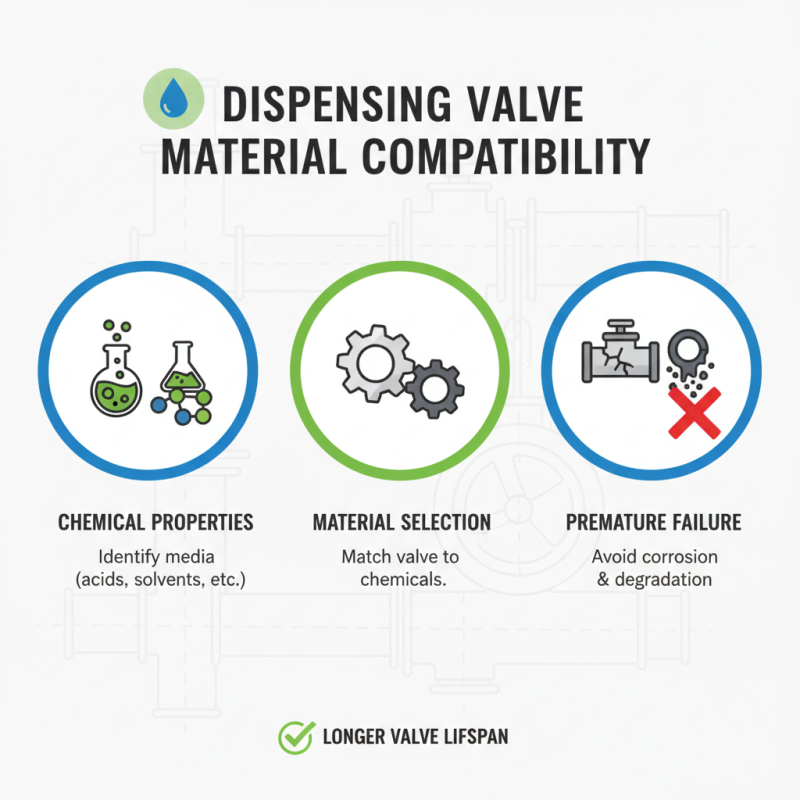
When selecting dispensing valves, material compatibility is crucial. The chemicals you work with dictate the materials that can withstand exposure. For instance, acids may corrode certain metals. Rubber seals might degrade in the presence of solvents. It’s vital to identify the chemical properties of your media. This information helps in selecting a valve that won’t fail prematurely.
Consider temperature and pressure as well. Some materials lose their integrity under stress. A valve that works well today may leak tomorrow. Frequent testing can ensure reliability. Look for resources that detail compatibility charts. They simplify your decision-making process. However, these charts aren’t foolproof. You may still need to conduct tests with your specific chemicals.
Remember to evaluate operational conditions too. The environment where the valve operates can affect its lifespan. If your application involves temperature fluctuations or vibration, this adds complexity. Sometimes, the right valve may not be obvious. Reflect on possible scenarios and gather feedback from users. This iterative process can yield better choices in the long run.
Determining Flow Rate and Pressure Needs
When selecting dispensing valves, determining flow rate and pressure needs is crucial. The right flow rate ensures efficient operation. Too slow, and production lags. Too fast, and waste increases. It's essential to assess the viscosity of the material being dispensed. Thicker fluids need higher pressure. You might find that what works for one substance fails for another.
Pressure ratings can be tricky. A valve may meet standard requirements but falter under specific conditions. Consider the environment too. Temperature fluctuations can affect pressure stability, impacting overall performance. Regular testing becomes vital. Using tools to gauge performance can provide insights, yet it's common to overlook this step.
Selecting the correct Harrington Valves might also involve trial and error. A solution that appears perfect might not deliver as expected. Feedback from operators is crucial in this process. Create a culture that encourages sharing experiences. This insight can lead to better choices and optimized production lines. Remember, continuous reflection on the process leads to improvements.
Examining Maintenance and Support Options Available
Choosing the right dispensing valves is only part of the equation. Maintenance and support options significantly impact your operational efficiency. Studies indicate that nearly 35% of businesses experience downtime due to valve-related maintenance issues. Understanding the support options available can help mitigate these risks.
When selecting dispensing valves, consider dedicated maintenance support. Responsive service can reduce potential problems. Regular check-ups and quick repairs will keep your operations smooth. Evaluate your supplier’s service response time. Aim for a partner that can address issues within 24 hours.
Tips: Invest in user-friendly maintenance guides. This can empower your team. Make sure training sessions are part of the initial setup. Proper education on Piston Gum Valves can reduce mishandling. Explore online resources and community forums. Engaging with other users can provide additional insights and best practices. This support network bolsters your operational efficiency and promotes a proactive maintenance culture.
How to Choose the Right Dispensing Valves for Your Needs? - Examining Maintenance and Support Options Available
| Valve Type | Application | Maintenance Frequency | Support Options | Expected Lifespan |
| Pneumatic Valve | Food Processing | Monthly | Online Support & Call Center | 5-7 years |
| Electric Valve | Chemical Dispensing | Quarterly | Onsite Training & Manuals | 8-10 years |
| Manual Valve | Pharmaceuticals | Bi-Annually | Workshops & Help Desk | 3-5 years |
| Solenoid Valve | Automotive | Monthly | Remote Assistance & FAQs | 4-6 years |
Conclusion
Choosing the right dispensing valves involves a comprehensive understanding of various factors that align with your specific application needs. It starts with grasping the fundamentals of dispensing valves, followed by a careful assessment of your unique requirements. Evaluating different types of valves and considering key features, such as ease of maintenance and material compatibility for chemical resistance, is crucial. Additionally, determining the necessary flow rate and pressure is essential to ensure optimal performance.
Finally, it is important to explore the maintenance and support options available for the dispensing valves you consider. By thoroughly analyzing these aspects, you can make an informed decision that not only meets your operational needs but also enhances efficiency and reliability in your dispensing applications.