In today's super fast-paced manufacturing world, everyone’s gunning for efficiency. Automation Dispensing Machines are really shaking things up on production lines, making things not only faster but also way more accurate. I was reading what industry expert Dr. James Chen mentioned recently—he said, “The secret to modern manufacturing is all about adopting cutting-edge automation tech.” That pretty much sums up how important it is to stay innovative, don’t you think?
Take the Dispensing Machine S-551, for example. It’s known for its precision and reliability, and it can be customized to suit different manufacturing needs. Companies that have started using the S-551 are seeing fewer mistakes and better output overall. And honestly, those kinds of improvements are what help businesses stay competitive and meet market demands without breaking a sweat.
That said, not all Automation Dispensing Machines are created equal. It’s really important for businesses to take a good look at what they need specifically and pick a machine that matches their operations. I know it can be pretty overwhelming with so many options out there—it’s almost like trying to find the perfect fit. Sometimes, finding the right machine calls for some reflection and a bit of trial and error. But trust me, choosing the right automation can totally transform your production process and make everything run so much smoother.
China's Leading Automation Dispensing Machines in Production Efficiency
China's automation dispensing machines have become a cornerstone of efficient production across various industries. These machines play a crucial role in improving accuracy and speed in material dispensing processes. They are engineered to handle diverse materials, thus catering to a wide range of applications. This adaptability is vital in today’s fast-paced manufacturing environments.
While many machines excel in specific tasks, some continue to struggle with versatility. It's essential to assess whether a machine meets the unique needs of a particular production line. Observing machine operation can reveal hidden inefficiencies that may not be apparent initially. User experience and feedback provide invaluable insights into the real-world performance of these systems.
Innovations in technology are constantly emerging, yet some machines fail to keep pace. Regular updates and maintenance are key to ensuring optimal performance. Addressing any weaknesses in the machine’s operation can lead to significant gains in production efficiency. Balancing reliability with cutting-edge functionality remains a challenge for manufacturers.
Key Features of Advanced Dispensing Machines in China
The efficiency of production in various industries heavily relies on advanced dispensing machines. In China, these machines have seen significant technological improvements. A recent report indicates that the market for automated dispensing systems is projected to grow at a rate of 6.5% annually, driven by increased demand in electronics and automotive sectors.
Key features of these advanced machines include precision, speed, and adaptability. Many new models can dispense materials at a rate of up to 100 components per minute. They offer real-time monitoring, ensuring consistent quality control. However, the complexity of these systems can lead to occasional malfunctions, highlighting the need for regular maintenance and operator training. Reports show that nearly 15% of downtime in some facilities is attributed to human errors during setup and calibration.
Moreover, the integration of smart technology presents both opportunities and challenges. While automation can enhance efficiency, the learning curve for operators may slow initial production phases. Companies must weigh the benefits of advanced features against potential skill gaps. Ensuring comprehensive training can mitigate these setbacks, allowing for a smoother transition into automated workflows.
Efficiency of Automation Dispensing Machines in China
This bar chart represents the key features of advanced automation dispensing machines in China. It highlights significant metrics such as speed, accuracy, versatility, cost, and maintenance frequency, showcasing the efficiency and capabilities of these machines in modern production environments.
Comparative Analysis of Different Brands in the Chinese Market
In the competitive landscape of automation, many manufacturers are evaluating dispensing machines for production efficiency. The Chinese market presents a range of options, each with unique strengths and weaknesses. A crucial factor is the machine's precision in dispensing materials, minimizing waste and increasing efficiency. With the Dispensing Machine S-331, users have reported more consistent results, yet it may fall short in terms of versatility for varied applications.
Brand reputation also plays a significant role. Established brands often come with years of research and development backing their products. These brands provide detailed technical support, ensuring users can optimize their machines. However, newer brands, while enticing with lower costs and innovative features, may lack reliability. Some users have voiced concerns over their long-term durability and customer service. It's essential to weigh these differences carefully.
In a market saturated with choices, manufacturers should explore their specific needs. A machine's capability to integrate with existing systems is vital. The Dispensing Machine S-331 offers good integration options, yet potential buyers should examine its adaptability. Decisions should be rooted in thorough evaluations of production requirements and machine capabilities, acknowledging that no single machine is perfect for all scenarios.
Impact of Automation on Manufacturing Efficiency in China
Automation is reshaping China's manufacturing landscape. Its impact extends beyond mere speed. Productivity gains are significant, as machines like the Dispensing Machine Q-6800 streamline processes. This efficient equipment reduces human error, ensuring consistency in production. However, a reliance on automation can create challenges.
Workers may feel displaced as machines take over tasks. Companies must balance efficiency with employee needs. Training programs are essential. Upgrading skills will help workers adapt to new roles. Some employees may resist these changes, fearing job loss. Communication is key to address these concerns.
Moreover, automation doesn't eliminate all issues. Quality control remains vital. Machines, including the Dispensing Machine Q-6800, require regular maintenance to function optimally. A breakdown can disrupt production and lead to losses. Manufacturers need a comprehensive plan to tackle these challenges while embracing innovation.
China Best Automation Dispensing Machine for Efficient Production
| Machine Type | Production Rate (units/hour) | Cost (USD) | Efficiency Improvement (%) | Return on Investment (Months) |
| Automated Dispensing Robot | 450 | 15,000 | 30 | 12 |
| Precision Dispensing Machine | 600 | 18,000 | 35 | 10 |
| Digital Dispensing System | 500 | 22,000 | 40 | 9 |
| Multi-Function Dispensing Machine | 400 | 20,000 | 28 | 11 |
Case Studies: Successful Implementation of Dispensing Machines
The landscape of automation in production has evolved significantly. Dispensing machines have become a cornerstone in enhancing efficiency across various industries. Case studies showcase how manufacturing firms have successfully integrated these machines into their operations. For instance, a recent report from a leading industrial automation firm highlighted that factories using automated dispensing saw a 40% reduction in waste. This clear metric illustrates the effectiveness of these machines.
Moreover, flexibility is another advantage. A food packaging company reported improving its production speed by 30% after implementing a dispensing machine designed for quick changes in product types. This adaptability enables companies to keep pace with market demands, which is crucial in today’s fast-moving environments. However, integration challenges still arise. Organizations often struggle to train employees on new systems, which can slow down overall efficiency.
Tip: Ensure proper employee training on new technologies to minimize disruptions during integration.
While many companies have benefited, others have found that initial investment costs can be a barrier. A case study from a tech manufacturer indicated that the upfront capital required for advanced dispensing machines can be substantial. This simple reality prompts businesses to thoroughly evaluate their budget before making decisions.
Tip: Consider long-term ROI rather than just initial costs.
Future Trends in Automation and Dispensing Technologies in China
The automation landscape in China is evolving rapidly, particularly in dispensing technologies. Recent industry reports highlight a projected growth of over 15% in this sector by 2025. This growth is driven by increased demand for precision and efficiency in manufacturing processes. As companies strive for higher output, investing in advanced systems like the Dispensing Machine S2-900 has become essential.
Innovation plays a key role in the future of automation. Technologies such as AI and machine learning are reshaping how dispensing machines operate. These advancements enable real-time monitoring and predictive maintenance, reducing downtime. An industry analysis indicates that automated dispensing solutions can enhance production efficiency by up to 30%.
Tips: Consider exploring hybrid models that combine traditional methods with automation. This approach allows for flexibility, especially during transitional phases in production. Additionally, regular training for staff can optimize machine use, ensuring all operators are familiar with the latest features. Such practices could mitigate potential operational flaws, fostering a culture of continuous improvement within organizations.
Challenges and Solutions in Adopting Dispensing Automation
The adoption of automation in production faces unique challenges. One pressing issue is the initial cost. Data shows that implementing an Industrial Dispensing Machine can reduce operational costs by up to 30% over time. However, many manufacturers hesitate due to upfront investment. This paradox often cripple small to medium businesses that might benefit the most from automation.
Training staff also poses significant hurdles. Reskilling employees demands time and resources. In fact, about 40% of workers express anxiety over new technology. This reluctance can stall the integration process. To mitigate this, companies are increasingly turning to modular training programs that personalize learning experiences. By breaking down technical tasks into manageable segments, employees adapt better.
Furthermore, maintenance and technical support remain vital concerns. A lack of reliable service leads to downtime. Reports highlight that nearly 20% of automated systems fail during their first year. Adopting proactive maintenance strategies, along with establishing clear support channels, should become a routine practice. These steps reinforce trust in new technologies while addressing critical flaws in adopting dispensing automation.
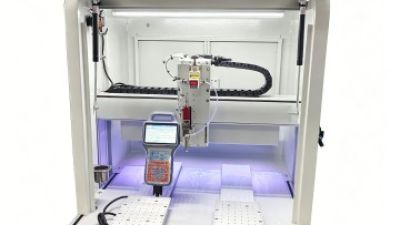
Maximizing PCB Protection: The Advantages of the AC-T6441-1 Desktop Conformal Coating Machine
The AC-T6441-1 Desktop conformal coating machine stands out as a premier solution for enhancing PCB protection. Designed to facilitate the application of protective coatings, it boasts a maximum single-side coating area of L325mm × W245mm, making it suitable for a wide range of PCB sizes. With a robust machine weight of 100 kg and dimensions of L825 × W700 × H800 mm (including cover), this machine provides a stable platform for precise coating applications.
Equipped with a high-performance drive system that includes a stepper motor and synchronous belt control, the AC-T6441-1 ensures unmatched precision with a repeatability of ±0.02mm. The machine's innovative features, such as the one A-603 precision atomizing valve and dual Y-axis work surface, allow for efficient operations. The system supports travel speeds of up to 500 mm/s on the X, Y1, and Y2 axes, and 300 mm/s on the Z axis, maximizing productivity while maintaining exceptional coating quality.
With an adhesive tank capacity of two sets of 2L stainless steel pressure tanks, the AC-T6441-1 is designed for sustained production runs without the need for frequent refills. The in-house developed motion control system adds versatility, as operators can utilize teach-in modes for easy programming and reuse. This level of efficiency and performance makes the AC-T6441-1 an invaluable asset in optimizing PCB protection.
FAQS
: They include precision, speed, and adaptability. Many can dispense up to 100 components per minute.
Complexity can lead to malfunctions. Regular maintenance reduces downtime, which can be affected by human errors.
Automation enhances efficiency but may create a learning curve for operators. Initial slowdowns should be anticipated.
High initial costs can deter manufacturers. Small businesses often feel this burden despite potential long-term savings.
Implementing modular training programs helps. These allow employees to learn complex tasks in manageable segments.
Established brands provide reliable support and proven technology. Newer brands may lack long-term durability and service reliability.
Precision, integration capabilities, and adaptability are key. No single machine suits all production needs perfectly.
Companies should adopt proactive maintenance strategies. Clear support channels also help trust in new technologies.
Many workers feel anxious about automation. This can slow integration, highlighting the need for effective training.
Higher precision reduces waste and increases efficiency. It's crucial for meeting production quality standards.
Conclusion
The article explores the significant role of Automation Dispensing Machines in enhancing production efficiency within China's manufacturing sector. It discusses the leading automation technologies available, emphasizing key features that distinguish advanced machines from traditional methods. Through a comparative analysis of various brands, the article highlights how these machines contribute to streamlined operations and improved output.
Moreover, it delves into case studies showcasing successful implementations of dispensing machines, illustrating their impact on manufacturing efficiency. The piece also addresses the future trends in automation and dispensing technologies, while acknowledging the challenges faced in adopting such systems and proposing viable solutions. Overall, the integration of Automation Dispensing Machines is poised to transform production landscapes in China, fostering greater efficiency and innovation in manufacturing processes.